


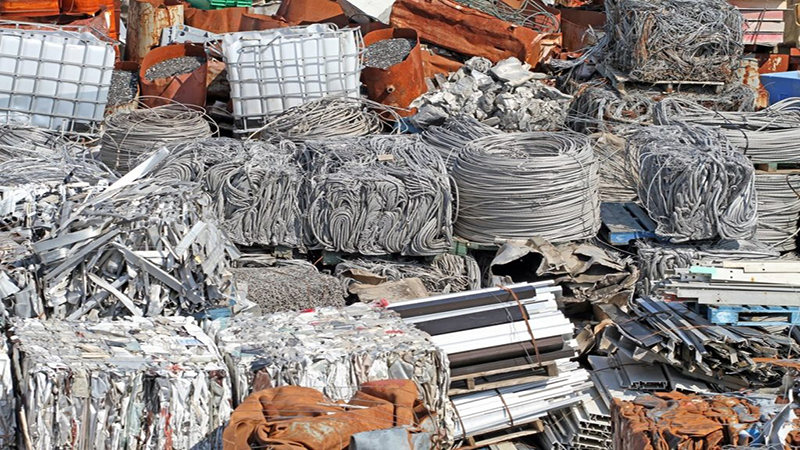
Since China banned waste imports in 2018, Southeast Asian nations have become the alternative destinations for global scrap flows. Facing mounting environmental pressure, these countries have implemented stricter waste import policies. For instance, in late 2018, Vietnam announced it would stop issuing new licenses for shipments of paper, plastic, and steel scrap to avoid becoming the world’s “dumping ground.” Malaysia, Thailand, and several other nations have also intensified regulations to protect the environment and promote a circular economy.
Malaysia Tightens Scrap Imports
Starting in the early 2020s, Malaysia began tightening regulations on imported scrap. In 2021, Malaysia’s SIRIM QAS announced new rules requiring all imported metal scrap to undergo pre-shipment inspection, allowing entry only for high-standard scrap (no crushed forms allowed, extremely low impurity rates). This regulation aimed to ban low-grade scrap and ensure high-quality imports.
By early July 2025, Malaysia implemented a new law requiring imported plastic scrap to be certified by SIRIM, accepting shipments only from Basel Convention member states or countries with relevant bilateral agreements. Consequently, as of July 1, 2025, most plastic scrap sources from the U.S. (a non-Basel member) are prohibited from entering Malaysia. Most recently, in February 2026, Malaysia announced a total ban on electronic waste (e-waste) imports. In short, Malaysia is tightening its grip category by category—from metals and plastics to electronics—to prevent the influx of hazardous and low-quality waste.
Thailand’s Proactive Waste Ban
Thailand has executed a rigorous roadmap for scrap imports. Since January 1, 2024, the country has restricted plastic scrap imports; initially, only factories in export processing zones were permitted to import certain quotas through 2023–2024, followed by a total ban starting in 2025. Thai authorities have clearly stated their goal: to prevent the nation from becoming a global “trash bin.”
Beyond plastics, Thailand recently issued a Decree in June 2025 banning all imported e-waste, expanding the prohibited list to include various used electronic devices and components containing hazardous substances. These steps demonstrate Thailand’s determination to enhance waste management and develop a circular economy. (Thailand has also set long-term environmental targets: for example, under its Action Plan, it expects to increase the recycling rate of municipal waste to 40% by 2027 and reduce plastic debris in the ocean by 50% within the same period.)
Vietnam: Strict Management and Reducing Dependency
Over the past few years, Vietnam has also tightened its control over scrap imports. In 2020, the Government issued Decision 28/2020 banning the import of certain types of scrap and waste. More recently (May 2023), the Prime Minister issued a regulation removing several HS codes (e.g., HS261800 – granulated slag from iron/steel, HS470790 – recovered paper/pulp) from the list of permitted imports for production materials.
Notably, in early 2025, the Ministry of Natural Resources and Environment issued a series of new National Technical Regulations on imported scrap (including iron, steel, plastic, paper, glass, and non-ferrous metals). These regulations clearly define types, quality standards, and inspection conditions to ensure environmental safety. For example, steel scrap must be bundled for easy inspection, and the mixing ratio between permitted categories must not exceed 20%.
Furthermore, since 2019, Vietnam has banned the import of recycled plastics from electronic equipment (e-plastic)—such as computer casings and old office gear—to prevent plastic waste mixed with hazardous chemicals. Vietnam is also aiming to gradually reduce its reliance on imported scrap. Reports show Vietnam targets managing (recycling or treating) at least 85% of plastic waste and reducing marine plastic litter by 50% by 2025. Overall, Vietnam is strengthening technical barriers to reduce scrap import ratios while boosting domestic production of alternative materials.
Other Countries and Regional Context
Many other ASEAN nations are adopting similar measures. For example, Indonesia announced a total ban on plastic scrap imports starting in 2025 to shift focus toward domestic recycling. The Philippines is considering a law to ban all solid waste imports (Draft SB2957 in 2025) following several cases of seized and returned foreign waste. Singapore is actively pursuing circular economy goals, while smaller nations like Brunei, Laos, and Cambodia are beginning to establish legal frameworks for plastic and waste management.
In general, ASEAN countries share a trend of increasing control over scrap imports in accordance with the Basel Convention and bilateral agreements. They have also set ambitious targets for plastic waste reduction (Malaysia aims for 100% recyclable plastic packaging by 2030; Indonesia seeks to reduce marine waste by 70% by 2025; Vietnam aims to process 85% of plastic scrap by 2025).
Future Outlook
These trends suggest that in the coming years, ASEAN will likely continue to tighten management of imported scrap. Governments are prioritizing the circular economy, requiring higher recycling standards and Extended Producer Responsibility (EPR). This context may lead to even stricter regulations on high-pollution scrap (plastics, electronics, metals) and a shift toward domestic processing and reuse.
Government commitments also signal a future of restricted imports: for instance, Malaysia’s pledge for 100% recyclable plastic packaging by 2030 and other ASEAN efforts to build plastic waste reduction and collection plans. In summary, the general trajectory for ASEAN is the increasingly stringent enforcement of environmental and import regulations to mitigate environmental risks in the medium term.